



DYSTEN PASSENGER INFORMATION DISPLAYS IN FRANCE
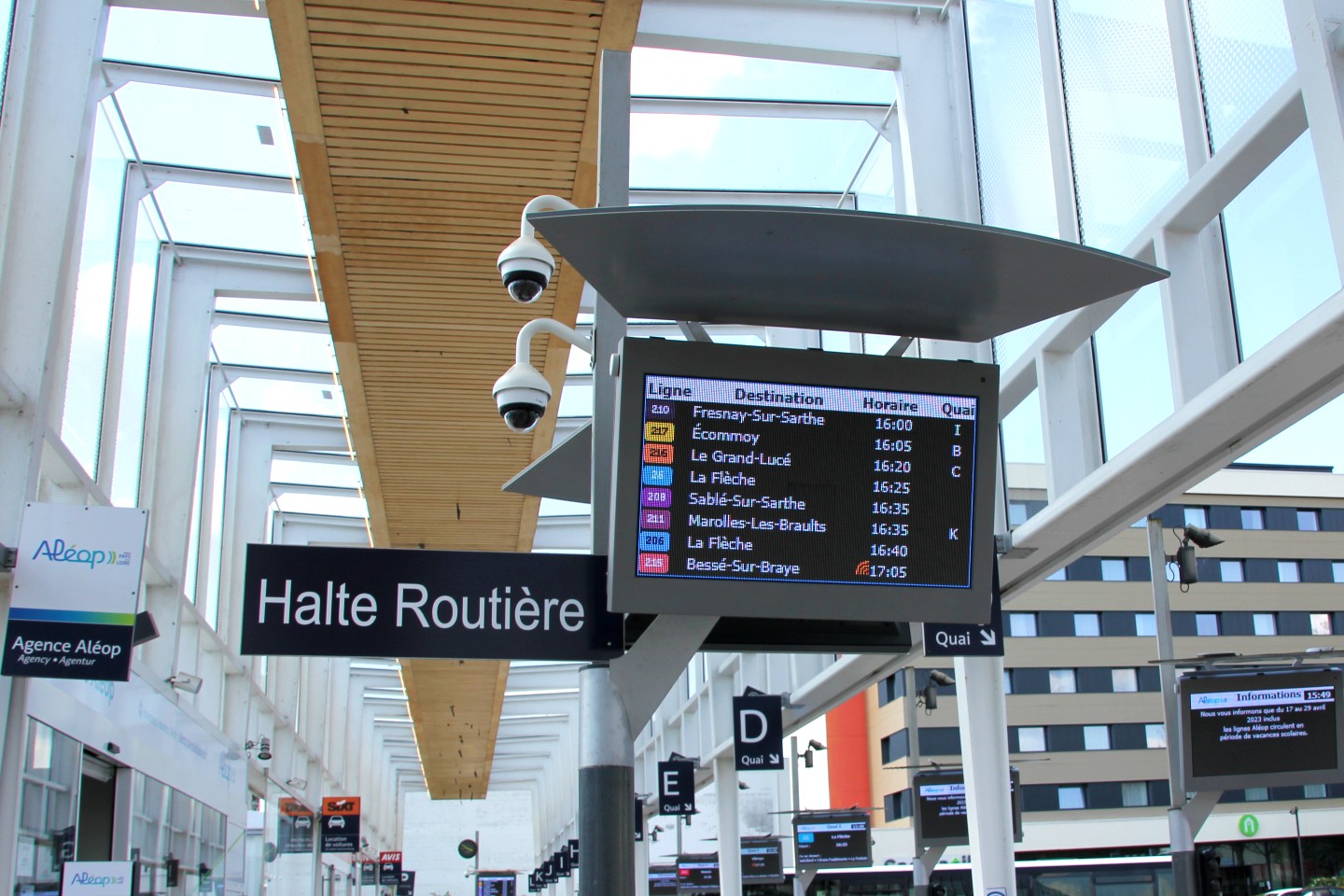
Dysten delivered advanced passenger information displays that fully adapt to existing software and local IT infrastructure. The architecture of the company’s devices allows for seamless integration with operational systems, precisely replicating locally approved data display patterns and graphical layouts. As a result, DYSTEN boards become a natural extension of the established ecosystem, eliminating the risk of destabilizing proven solutions and allowing local administrators to maintain full, uninterrupted control over the entire passenger information system.
Le Mans and Poitiers with Dysten passenger information displays
Travellers can use the facilities to easily and quickly check current timetables. The previous TFT LCD displays installed at Le Mans station have been replaced with RGB LED devices. The replacement project is part of the refurbishment of the entire station, and the new displays greatly increase the attractiveness of the station – making it easier for passengers to find their way around and reducing transfer times.
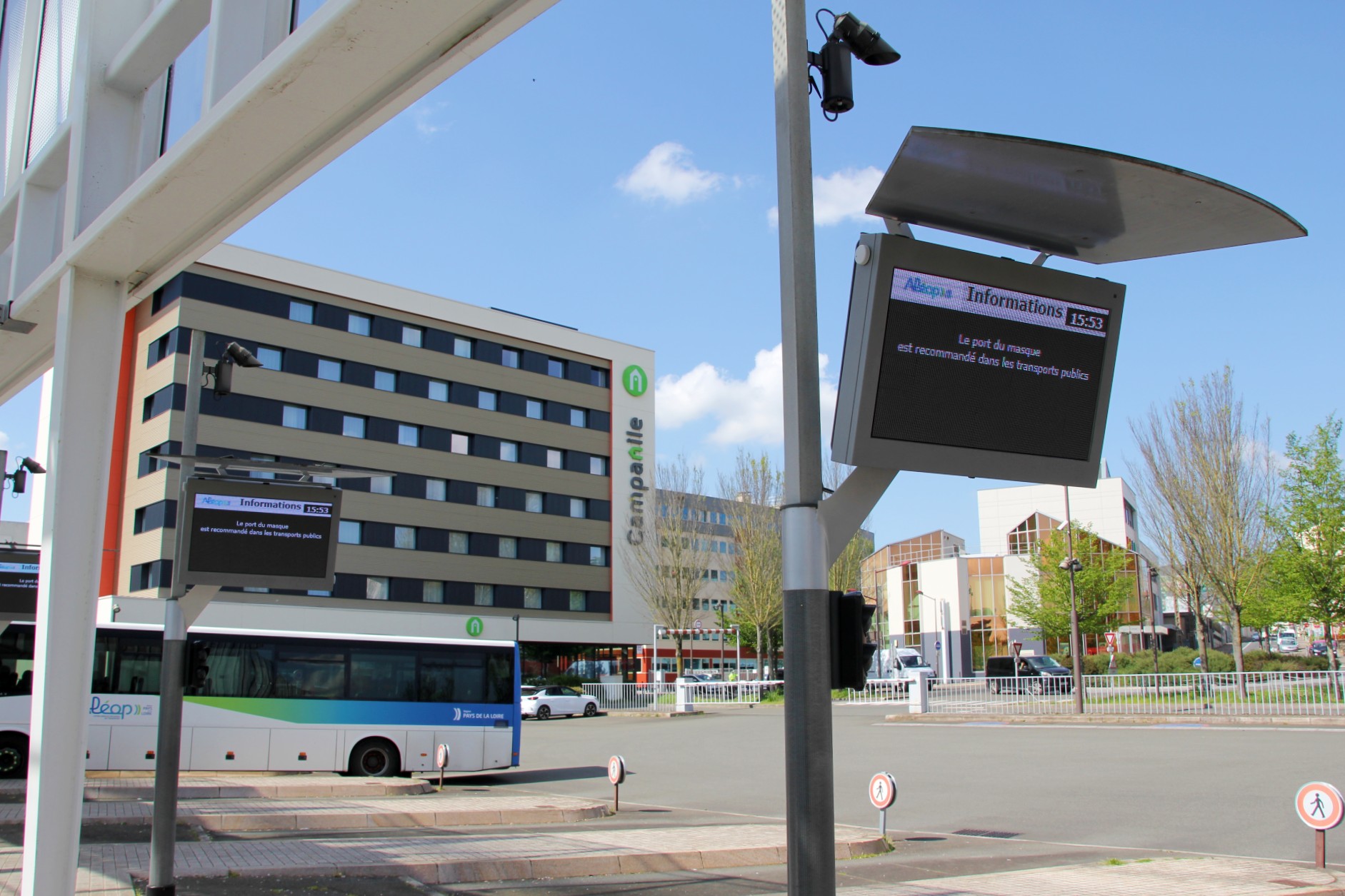
Le Mans station is a major interchange facility serving a large number of travellers at 16 bus stands and a train station. Passenger information displays with timetables are a major convenience. A built-in light sensor adapts the brightness of the device to the lighting conditions in the station. Passengers can easily read all the information, even in bright sunlight, which used to be a problem with previous TFT LCD displays.
The displays provide high-quality image and full flexibility in the choice of colours and presentation of graphics and logos. All presented content is highly visible even at different viewing angles. The appropriate tilt of the displays ensures good readability and comfortable use.
The use of special outdoor panels made it possible to reduce the size of the displays, while at the same time ensuring high protection without the need for protective glass. The good adaptation of the boards to the existing infrastructure contributed to a fast and efficient installation.
The devices provided by Dysten also serve travellers at the bus station in Poitiers. The roofed facility is located at the heart of a multimodal interchange. It constitutes a central point connecting urban, regional and international transport services. Sixteen passenger information displays have been installed there. The station has a dozen or so bus stands, a recreational room for drivers and a waiting area for travellers. Its convenient location, well-developed infrastructure and variety of connections make it an important hub in the city’s transport network.
Replacing Displays at Nevers Bus Station
Dysten produced 12 dynamic passenger information devices for the Bus Station in Nevers. It involved providing 2 collective boards and 10 small passenger information boards. All displays were made with RGB LED technology.
One of the key distinguishing features of the devices is their exceptionally high display quality. With a 2.5 mm raster, their resolution is comparable to TFT screens. Consequently, passengers can enjoy easy-to-read, clear, and engaging content. This is undoubtedly a new quality in the information board market, and a significant step to improve the traveling experience.
The devices in Nevers are equipped with a dynamic passenger information system. The displays can present current timetables, important announcements, or special information for passengers. Having this information readily available throughout the trip, travelers can now enjoy a smooth and comfortable journey.
The challenge encountered during the implementation of the project was to match the devices to the poles located at the station. The displays were designed to provide a seamless installation and a perfect fit for the existing infrastructure. This contributed to minimizing costs and streamlining the process of device replacement.
Completed Tasks
The cooperation included the manufacture and delivery of customised equipment:
For the Le Mans bus station:
- 14 RGB LED platform displays
- 2 collective RGB LED passenger information boards
For the bus station in Poitiers:
- 16 single-sided RGB LED dynamic passenger information system displays
For the bus station in Nevers:
- 2 collective passenger information boards with LED RGB 2.5 mm raster
- 10 station displays with LED RGB 2.5 mm raster
Higher Quality of Service at Bus Stations
Passenger information displays acquire data directly from the GPS systems of buses, providing highly accurate information on their arrival times. Passengers can follow the timetable in real time based on the data provided by the devices. As a result, they can easily plan their journey, avoiding unnecessary waiting and delays. The project has improved the quality of service at bus stations, providing passengers with easy and convenient access to information about timetables, bus routes, delays and other important information. The applied solutions improve travel comfort and contribute to an increased interest in public transport.
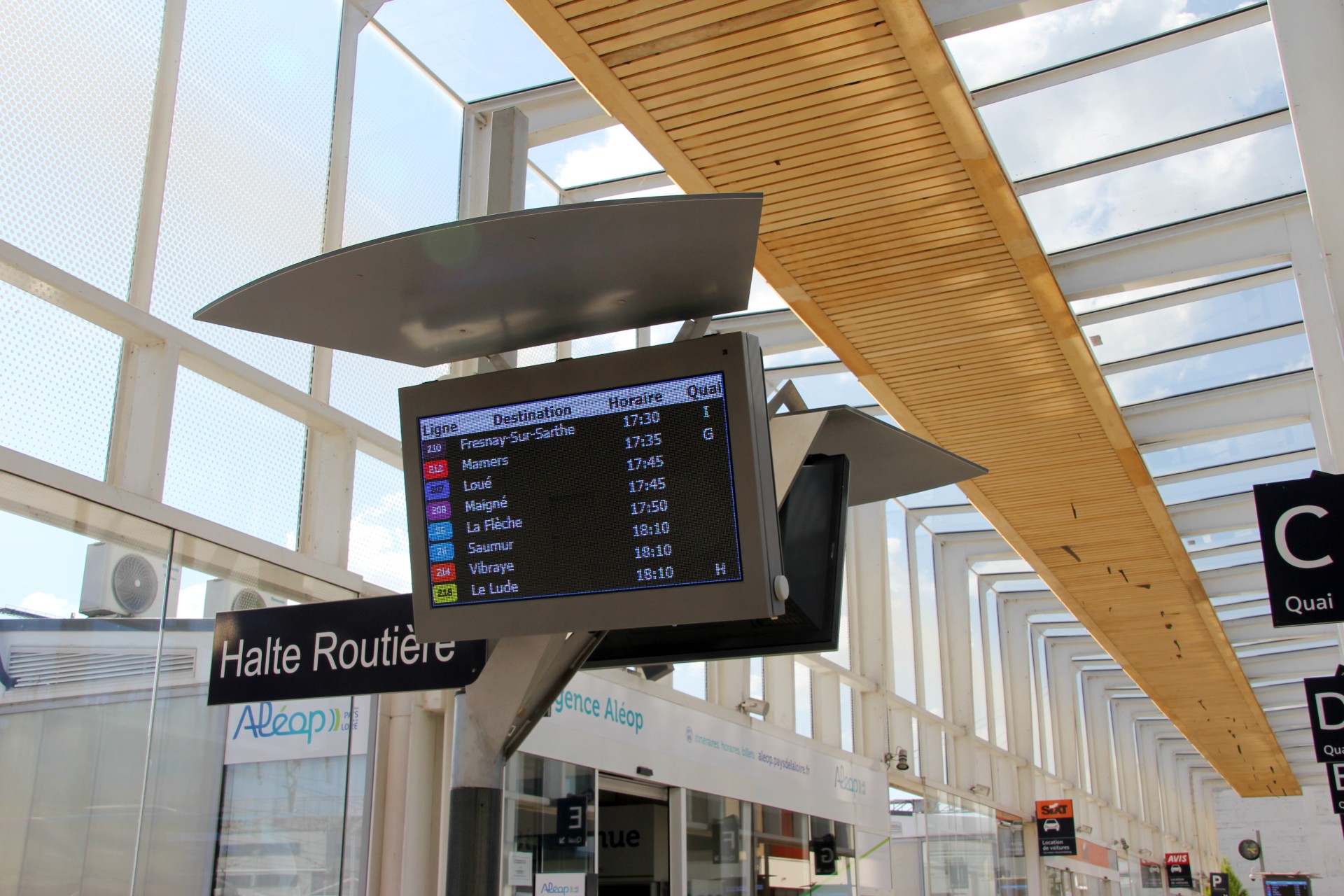
At Dysten, we are proud of our extensive experience in the highly mature French market, where we have successfully delivered precisely tailored, advanced passenger information displays for the bus stations in Le Mans and Poitiers, perfectly meeting the sophisticated technological expectations of the local transport infrastructure.
Passenger information systems in comparable procurements
This project demonstrates DYSTEN’s experience in the design, manufacture, supply, integration and commissioning of the stated technology. In comparable procurements, DYSTEN can deliver a defined equipment and system package or, where appropriate, a complete solution, with clear interfaces for the contracting authority, system integrator and main contractor.
Related CPV / tender codes
- 48813200 Real-time passenger information system Core code
- 48813100 Electronic bulletin boards Additional code
Project / solution scope
- Design and engineering
- Manufacturing
- Supply
- Software
- System integration
- Commissioning